ORMUS Technologies
We build business systems that run on artificial intelligence
For marketplaces, retail and contact centres. ROCAR, ANCO and Funland Voice AI are products our team takes from analysis and architecture through integration, launch and long-term support.
The code, the database and the infrastructure are handed over in the client’s name.
System layers
- InterfacesWeb, mobile, dashboards
- AI agentsDialogue and decisions
- ModelsRecognition and prediction
- DataCatalogue, orders, records
- InfrastructureServers, cloud, monitoring
A product in service
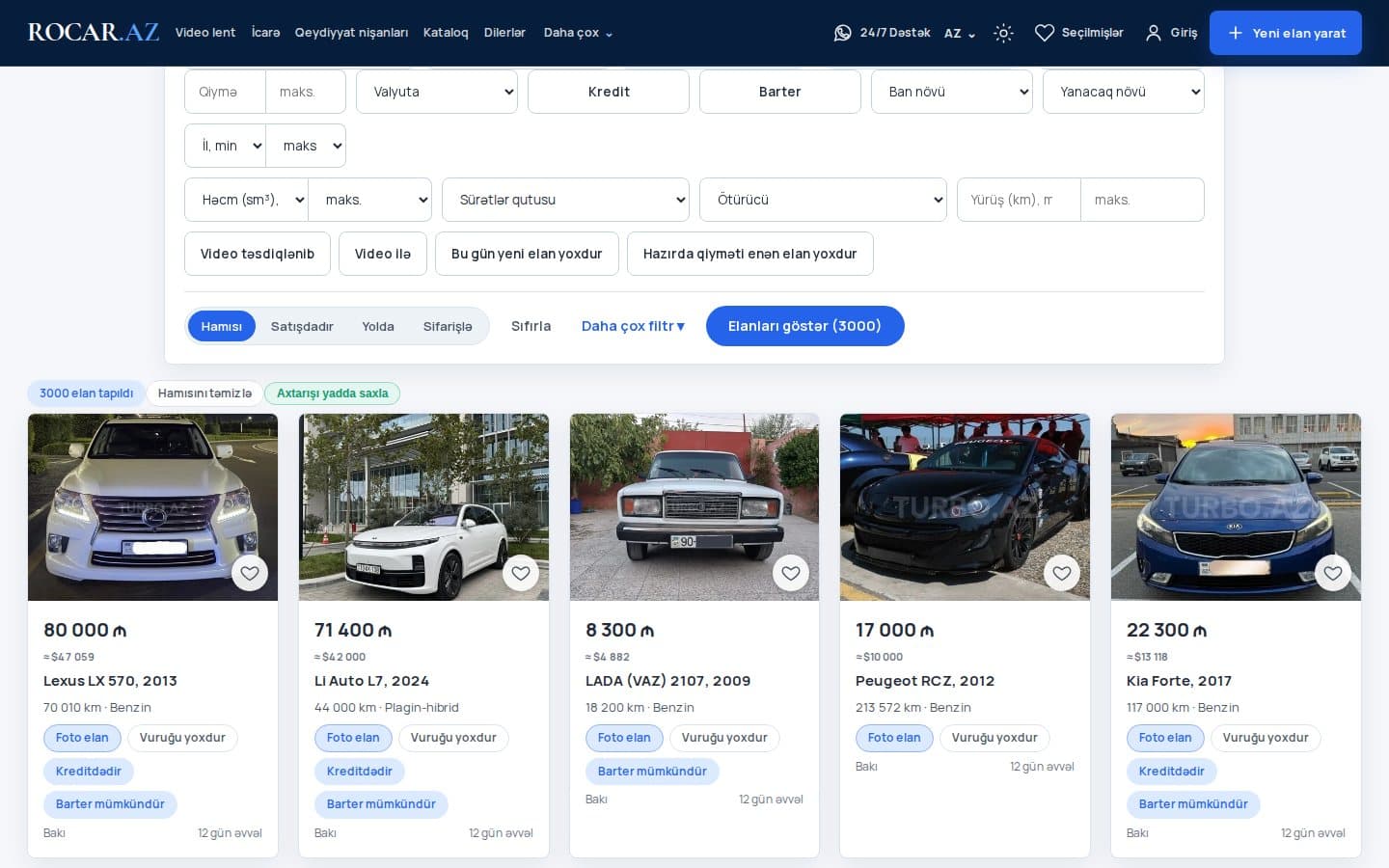
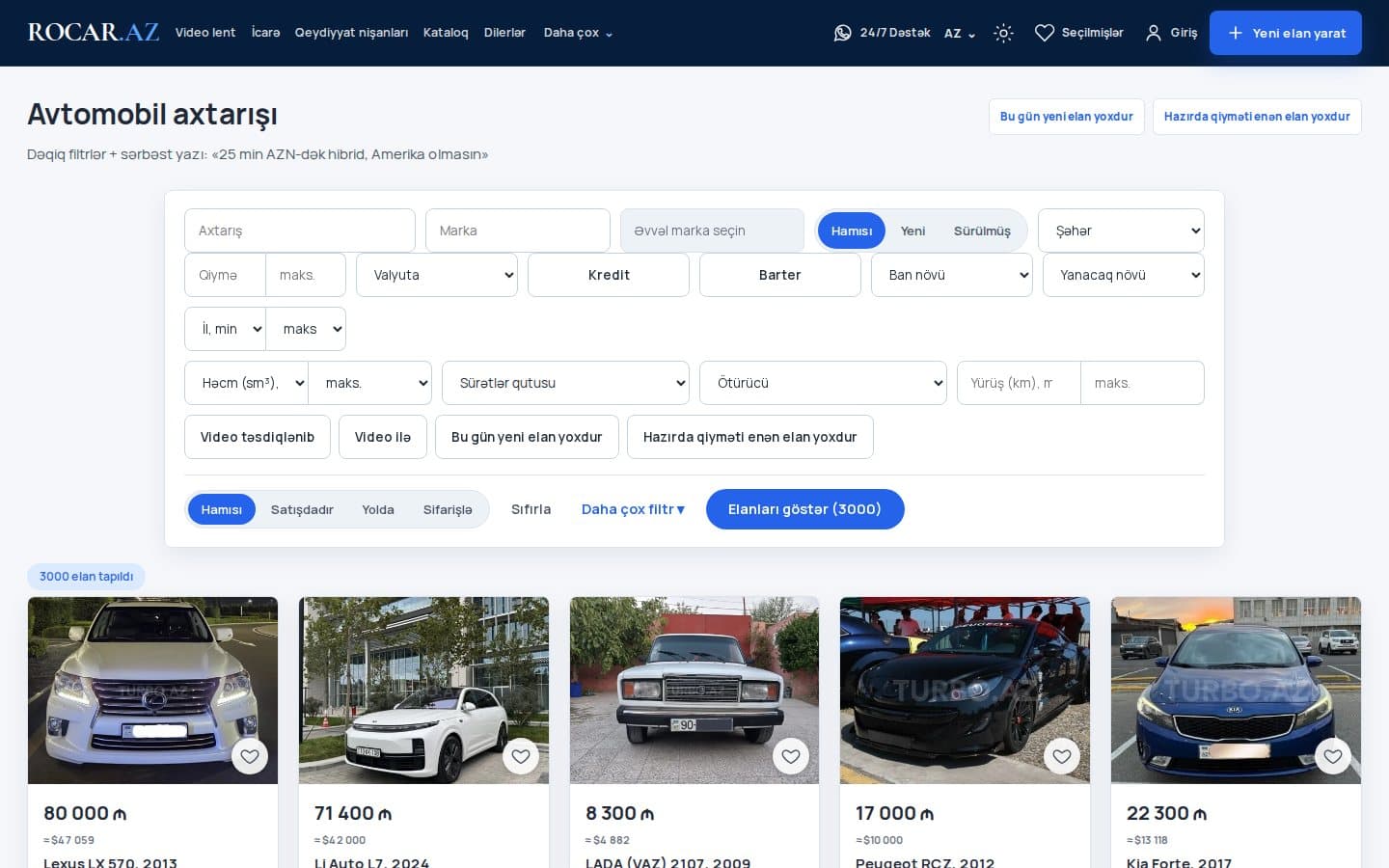
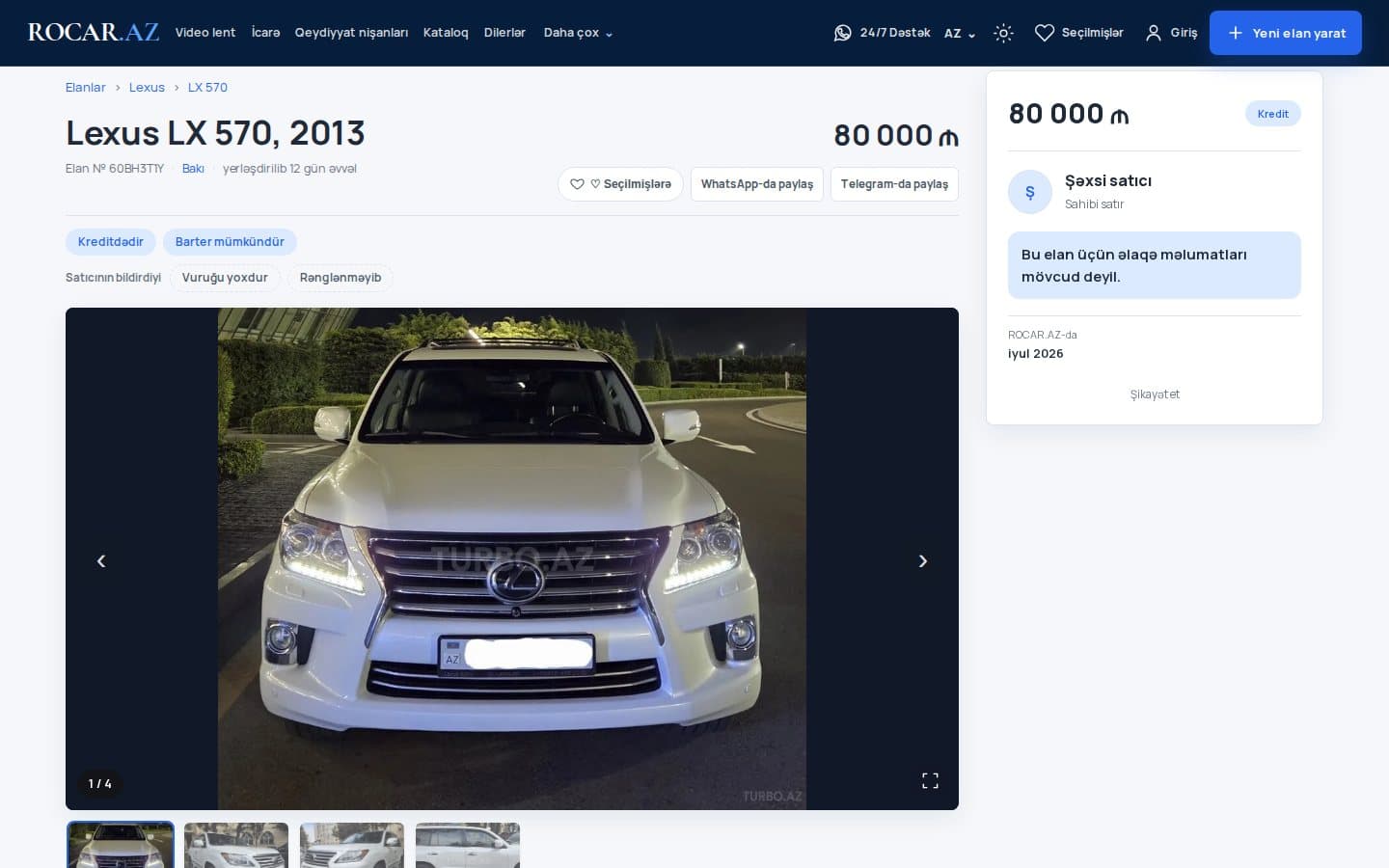
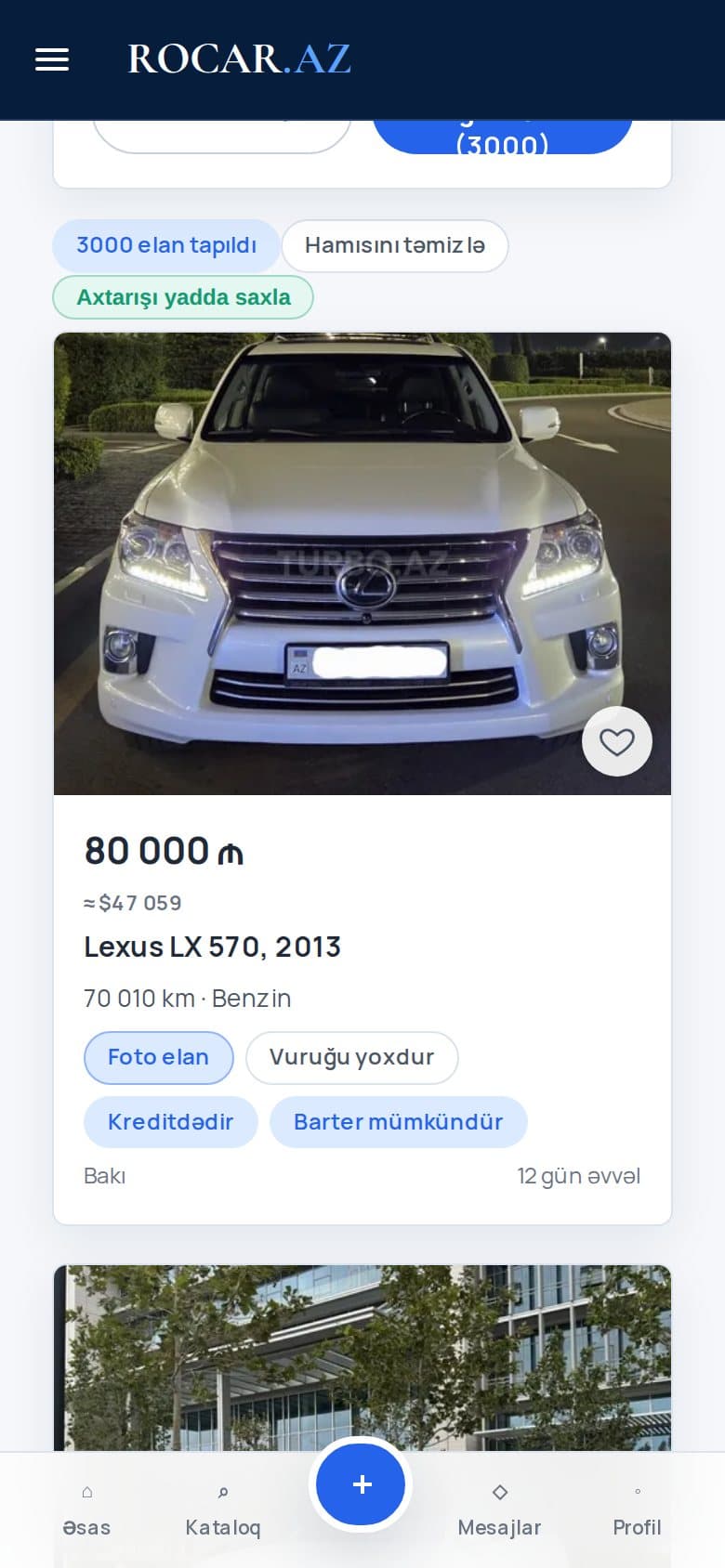
Live productROCAR — a vehicle listings platform
Catalogue, precise filters, free-text search and the listing page. The platform side, the search logic, the integrations and the release process are the ORMUS team’s work.
- Platform-side development
- Search and filtering logic
- System integrations
- Infrastructure and ongoing technical support
Screenshots taken from public pages of rocar.aimarket.az.
Scenarios
Artificial intelligence inside a real user journey
Two different kinds. One works over a catalogue and returns its answer on screen; the other works inside a phone call and writes its answer into the system.


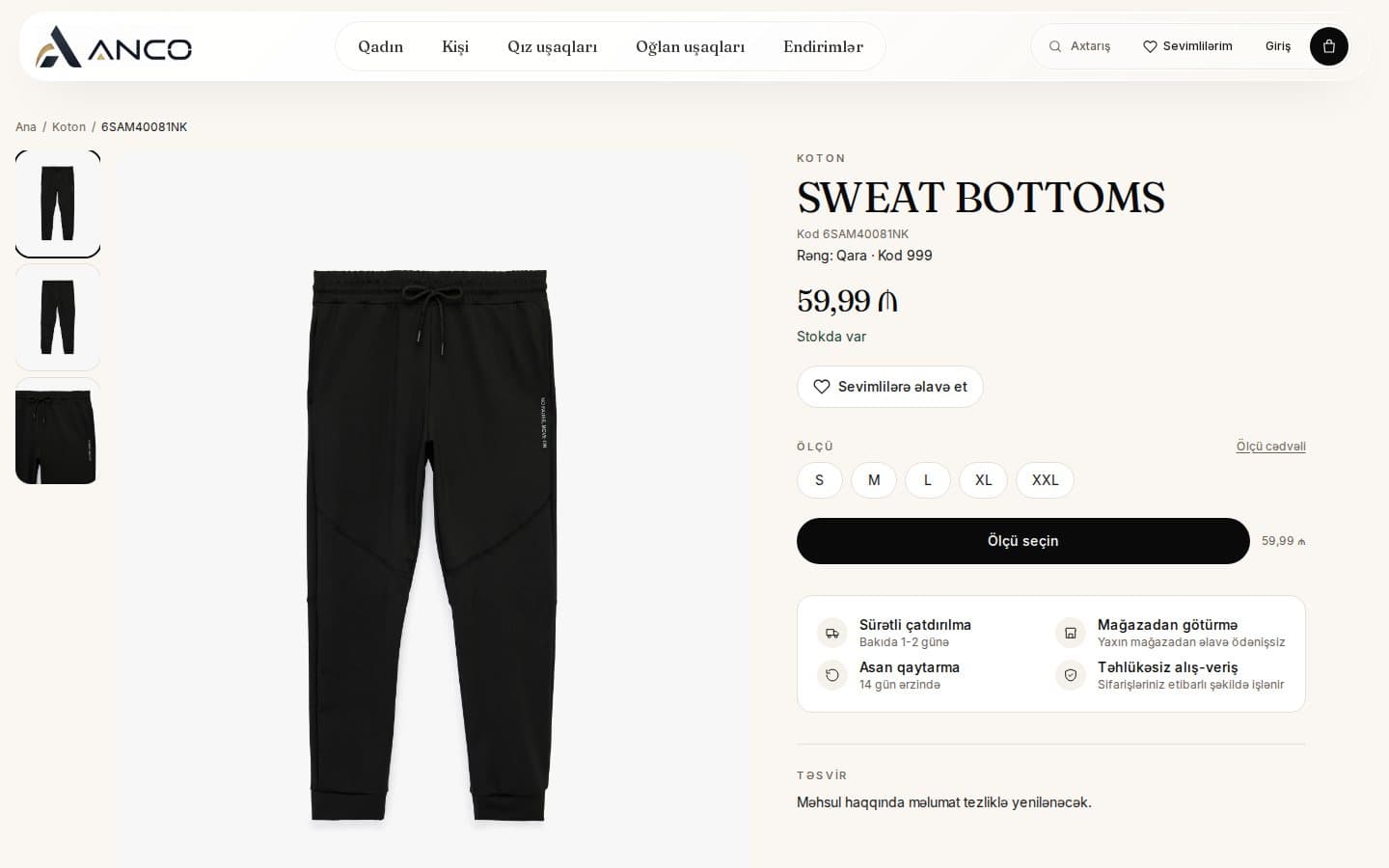
ANCO — finding a product from a photo
A multi-brand online store. The customer sends a photo of an item, the system finds the match in the catalogue and shows what is in stock.
The customer sends a photo
Through “search by image” in the search bar.
The model reads the image
Category, colour and shape are extracted.
The catalogue is searched
Across Koton, LC Waikiki, Decathlon and Penti.
Availability is checked
Size, stock and collection from the nearest store.
The answer goes back
Product page, price and a delivery option.
Screenshots taken from public pages of anco.az.
Funland Voice AI — handling an inbound call
Voice AI answers the call, works out the question, fetches what it needs and stores the outcome as a structured record.
This is a visual demonstration of the scenario, not a recording of a real call.
Practices
Four practices, one system
Each practice owns a layer of the system; the data layer underneath is common to all of them. Pick one — the object shows you where it works.
Models
- Image and text recognition
- Document processing and search
- A model on your own infrastructure
The path of the data
From the customer to the outcome
One architecture, different industries. Pick a scenario and follow the stages the data passes through.
Customer
The customer sends a photo of an item
Channel
Web or mobile app
ORMUS AI
The image is recognised and matched against the catalogue
System
Catalogue and stock levels
Outcome
Size, price and the nearest store are shown
Foundations
Process, security and infrastructure
What keeps a system running for years is rarely the part you can see. These three are on the table from the first day of a project.
How the work runs
- Discovery and analysis
- Technical specification
- UX/UI and prototype
- Development
- Integration and testing
- Launch
- Support and growth
Confidentiality as a technical requirement
Security is an architectural decision, not a checklist at the end of a project. Access rights, data retention and how auditing works are settled in the first document.
Data residency
The country and server where sensitive data is stored are agreed up front.
Access control
Role-based permissions, two-factor authentication and an audit record for every operation.
Encryption
Encryption in transit and at rest, with key management kept separate.
Controlled releases
Changes pass through a staging environment, with a rollback plan ready in advance.
Contact
Let’s discuss your project
A short description is enough. In the first conversation we establish whether the problem is solvable, the rough scope, and the first step.
We normally reply within one working day.